

For years, my brother, father and myself would get into heated debates over just about everything.
You could say we know how to push each other’s buttons.
To outsiders, our family dynamic might look hostile.
But when it comes down to it, we would do anything for each other.
There’s usually a gap between what people say and what they do.
My family may say things to provoke each other, but our actions point in the complete opposite direction.
The same principle applies to how I watch markets and geopolitics.
Watch what they do, not what they say
Since Trump was re-elected, I’ve been paying increasing attention to what he does versus what he says.
I came across this interview with Firas Maksad of the Eurasia Group on CNBC that laid out what he sees Trump’s next move in Iran:
The core of Maksad’s argument, at the 2:45 mark:
Every time the President has chosen to deploy military assets, whether it was in the 12 day war against Iran some year and half ago, or whether it was against Muduro in Venezuela and the lead up to this war, he’s actually use those military assets once they’re in theater.
And on how to interpret the administration’s mixed signals:
There’s a clear discernible strategy here in terms of communication. […] I think it’s in the interest of the administration to try and manage oil prices, manage the markets, keep them under control in order to prosecute this war longer and further degrade Iran’s military capabilities. So if we see a lot of back and forth in terms of the administration’s signalling, it’s part of that strategy of actually trying to manage the markets. It’s not necessarily indicative of where the President is going. I’m watching the military deployment much closer than I’m actually watching and indexing what the President is saying.
That last line is the one to take point.
Watch the troops. Not the tweets.
Tonight at 8pm Eastern
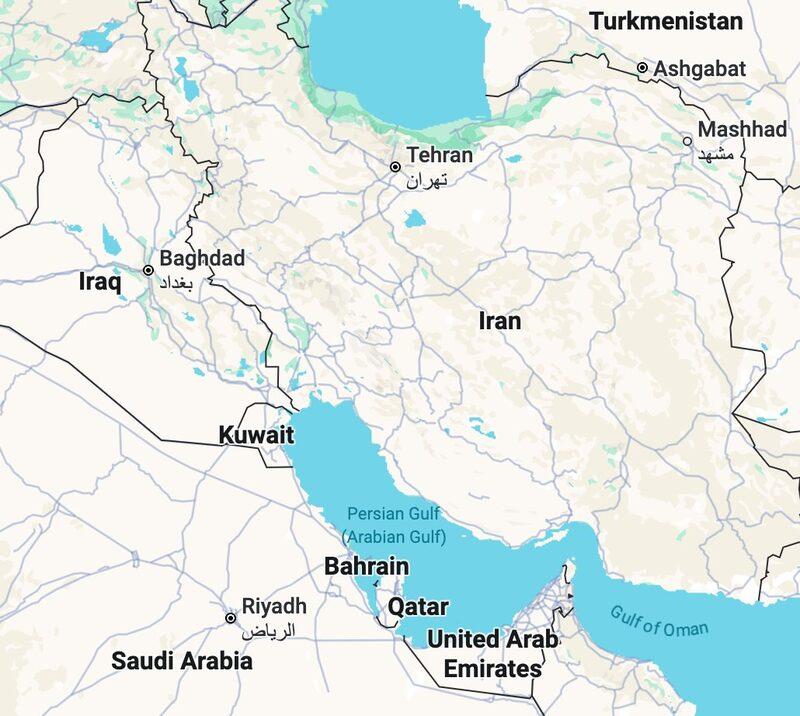
Source: Google Maps
I believe the United States will try to buy time by either doing small scale bombings or making claims that Iranians are negotiating and push for a delay for another week.
This is all in preparation for a ground invasion.
In the same interview, Maksad noted that most US troops en route will arrive mid-April.
That timeline matters.
I’m watching for increased market volatility reflecting further stress and fear from investors.
As of now, it is hard to believe a conflict of this scale has not already had a more visible impact on financial markets. Historically, it would have.
We wrote about the importance of holding more liquidity during moments exactly like this one:
https://www.ecresearchgroup.com/p/do-these-when-the-market-feels-overwhelming
https://www.ecresearchgroup.com/p/cash-is-trash-but-liquidity-is-king
45% in highly liquid cash-like positions
Lance Roberts, Chief Investment Strategist at RIA Advisors, manages over $1 billion in assets under management.
In a recent interview, he shared that one of their model portfolios is currently positioned as follows:
20% cash
25% short-term treasuries
You can watch the part he talks about their liquid positions in the interview here:
https://youtu.be/37Sjc0OXKKw?si=47XkYIvWcBNm9kAe&t=4793
Combined, that’s 45% in highly liquid, capital-preserving positions.
This is not a retail investor hiding under the mattress.
This is a professional with over a billion dollars at stake, choosing patience over risk.
That choice speaks louder than any pundits on financial media.
Again, watch what they do, not what they say.
If you like my work, I invite you to share it with others.
Eric Chang
Calgary, Alberta, Canada
April 7, 2026
Copyright © 2026 EC Research Group.
No part of this publication may be reproduced, distributed, or transmitted in any form or by any means, including photocopying, recording, or other electronic or mechanical methods, without the prior written permission of the publisher, except in the case of brief quotations embodied in critical reviews and certain other noncommercial uses permitted by copyright law.
The information provided herein is believed to be accurate and reliable, but EC Research Group does not guarantee its accuracy or completeness. The content is for informational purposes only and is not intended to be a substitute for professional financial advice. EC Research Group is not a financial advisor and does not provide personalized financial advice. The views and opinions expressed in this publication are those of the author and do not necessarily reflect the official policy or position of EC Research Group. The content may be subject to change without notice and may become outdated over time. EC Research Group is under no obligation to update or revise any information presented herein.
Investments involve risks, and individuals should consult with a qualified financial advisor before making any investment decisions. Prospective investors should carefully consider the investment objectives, risks, charges, and expenses of any investment before investing.