

On February 12, we’ll be releasing my 2026 Economy & Market Predictions. You can register with this link below:
Last week I hosted a Review of my 2025 Market & Economy Predictions.
It was great seeing some of you, our loyal readers on the zoom call!
Why reviewing predictions matters more than making them
Everyone loves predictions when they are right.
They get shared. They get quoted. They get remembered.
Very few people want to revisit predictions when they are wrong.
That discomfort is exactly why reviewing predictions matters more than making them in the first place.
During the call, I walked through my 2025 Economy & Market Predictions and did something not every commentators will do.
I put them side by side with reality and asked one simple question.
What actually happened, and why?
Not to defend myself. Not to prove anything. But to learn.
Anyone can make bold calls. That part is easy. The hard part is accountability. Sitting with the outcomes. Studying what I missed. Understanding whether my logic was sound or whether I was simply lucky.
This is why prediction reviews are so powerful.
It opens up my thinking process. It keeps me humble. It sharpens my judgment over time.
If you missed it, reply to this email and my team will send you the recording.
During the call, I’ve mentioned how Gold is very likely to “crash” soon.
I’ve written about becoming bearish or concerned about Gold in last week’s newsletter.
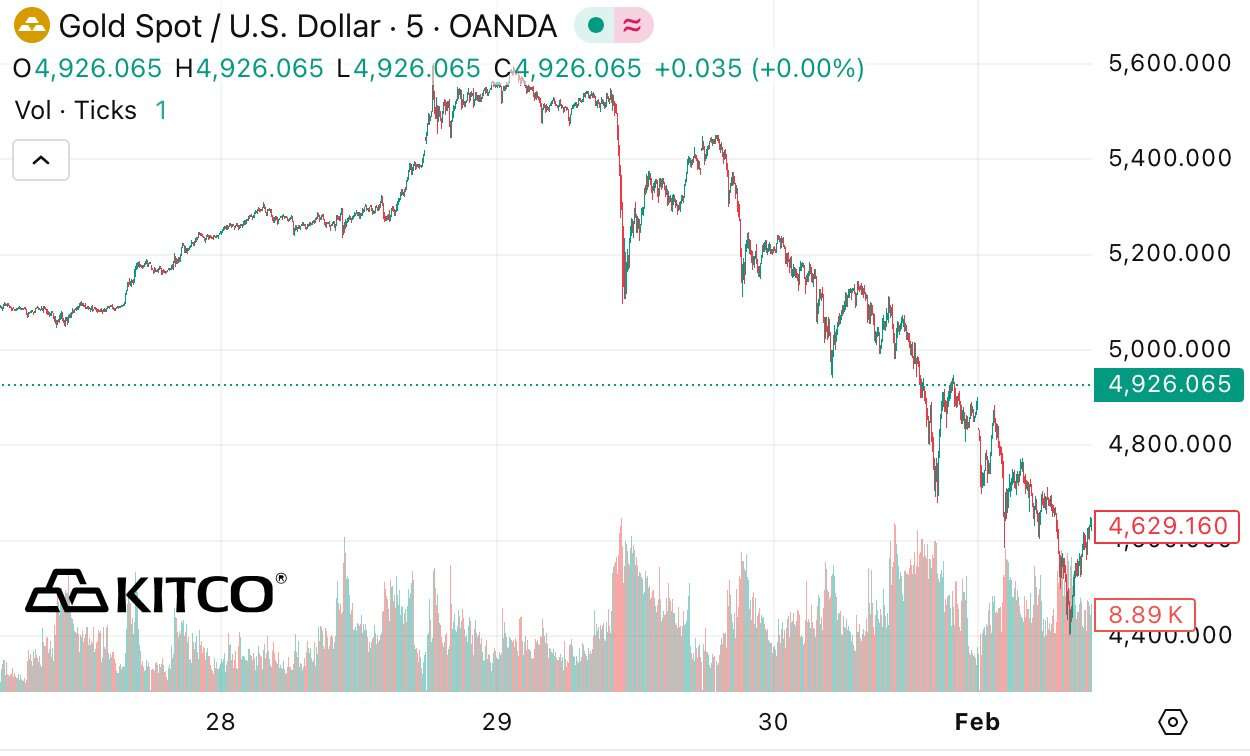
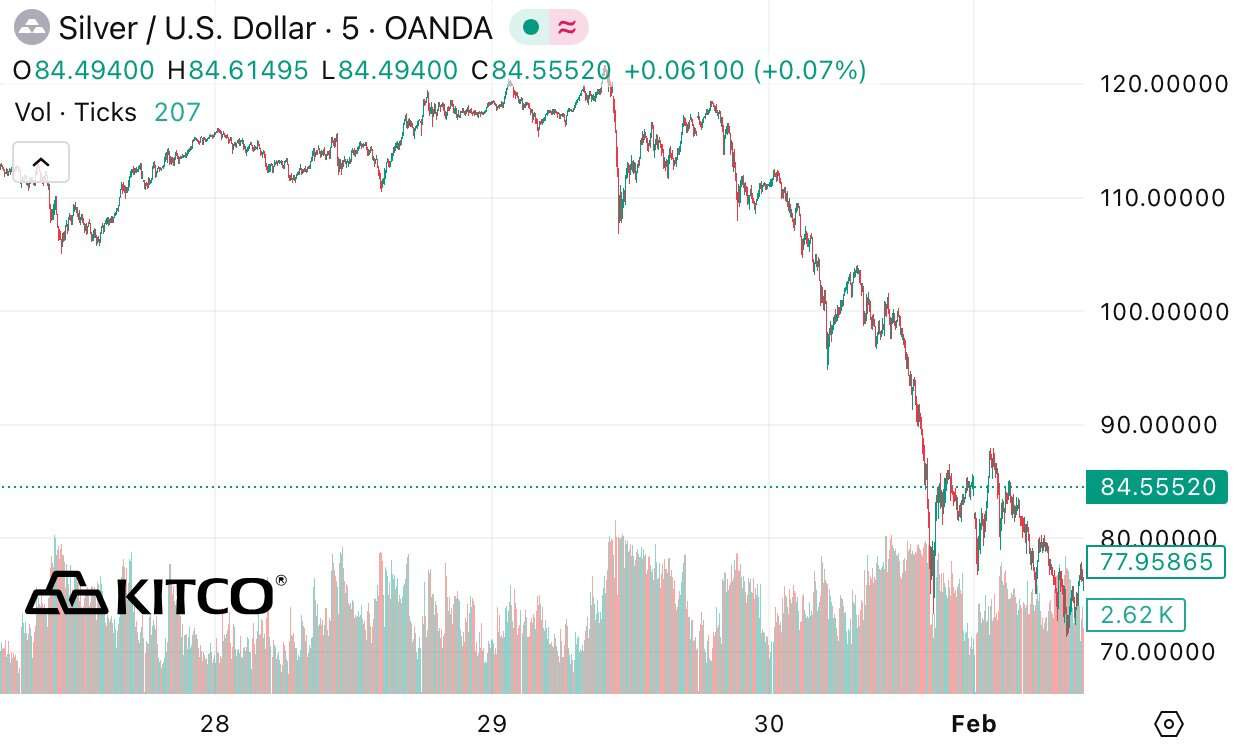
Couple days after the Review of my 2025 Predictions call, Gold and Silver crashed.
Gold dropped around 16% from 5,589 to 4,672.
While Silver plummeted 36% from 121 to 78.
How did I get that call perfectly, on the money?
Do I have a secret crystal ball?
Reader Shelley sent me a message over the weekend:
When you said we might be getting near the top of the rise, you weren’t kidding.
This was what I replied to her:
I certainly don’t have a secret crystal ball tucked away somewhere.
But I’ve been playing in the market for about 20 years now.
I’ve seen my fair share of cycles and know what to look for.
This is why I’m very cautious when people were going crazy on crypto. It was looking too frothy.
Same with gold a few days back.
I got “lucky”
It is impossible to know when the top or bottom is for a market or an asset.
I want to make sure I give credit where its due.
I got lucky with the timing of the call.
Simple as that.
That being said, there’s this quote I like:
Luck is what happens when preparation meets opportunity
It is possible to create “luck” by being more prepared.
Warren Buffett has repeated shared his belief against timing the market:
Time in the market is more important than timing the market
Meanwhile, we see him making moves ahead of a market crash by selling off assets and raising cash. Then buying cheap assets by deploying cash during or after a crash in prices.
We’ve written several issues on Berkshire’s massive cash like position - $382 Billions worth.
You can read up here and here.
This is the part that can be confusing to investors.
Why is Warren Buffett saying not timing the market and meanwhile, he does “time” the market when it gets close to major market top and bottom?
This is because, he is expert at understanding market cycles.
He doesn’t know when the exact top or bottom is.
But he does know when the top or bottom is near.
That’s why he has been preparing for a market correction for some time now.
He is once again, not “timing” the market, but getting prepared for what’s to come.
Is he lucky or is he prepared?
One can say he is lucky many times, or from my observation, he is simply well prepared for the next best opportunity to appear.
My secret “crystal ball”
In case there’s any doubt, I’ll clear the air here:
I don’t have a secret crystal ball tucked away somewhere.
I wish I did.
But I don’t.
What I do have, is an obsession toward studying the financial markets.
I’ve been following the market and the macro economy for close to 20 years.
For the past few years, I’ve spent an average of 10 hours a week studying and tracking the economy and the markets.
It’s a topic I find deeply interesting.
Even though I don’t have an actual crystal ball, I take the following approach to navigate the market.
You could call them my “crystal ball”:
Read, watch a lot of contents on financial markets & investing
Study economic data, especially the non-government data
Talk to uber drivers, waiters regularly to get a pulse on the real economy
Think contrarian, be a devil’s advocate
Study market cycles
Evaluating technical charting patterns
2026 Economy & Market Predictions
Once again, I’m going to tap into my “crystal ball” and make 10 predictions on what I think may happen and where the market is going this year.
Contrary to last year, it was one of the most challenging environment as the world navigates the dynamic trade situation with the US.
This year, I believe it’s much easier to make educated predictions.
As investors, I believe it’s critical to understand the bigger picture - the macro economic trends and forces driving the decision making in Ottawa and Washington.
Those decisions will ultimately affect us and our portfolio.
If you would like to see the 10 predictions I’m making for 2026 Economy & Market Predictions, you can sign up and attend live here:
If you like my work, I invite you to share it with others.
Eric Chang
Cardston, Alberta, Canada
February 3, 2026
Copyright © 2026 EC Research Group.
No part of this publication may be reproduced, distributed, or transmitted in any form or by any means, including photocopying, recording, or other electronic or mechanical methods, without the prior written permission of the publisher, except in the case of brief quotations embodied in critical reviews and certain other noncommercial uses permitted by copyright law.
The information provided herein is believed to be accurate and reliable, but EC Research Group does not guarantee its accuracy or completeness. The content is for informational purposes only and is not intended to be a substitute for professional financial advice. EC Research Group is not a financial advisor and does not provide personalized financial advice. The views and opinions expressed in this publication are those of the author and do not necessarily reflect the official policy or position of EC Research Group. The content may be subject to change without notice and may become outdated over time. EC Research Group is under no obligation to update or revise any information presented herein.
Investments involve risks, and individuals should consult with a qualified financial advisor before making any investment decisions. Prospective investors should carefully consider the investment objectives, risks, charges, and expenses of any investment before investing.